
Keywords are the backbone of search engine optimization. They help search engines understand what your content is about and help users find the right answers at the right time.
But when it comes to keywords, terms like keyword frequency, keyword density, keyword difficulty, and keyword proximity often confuse business owners and beginners.
We believe SEO should be smart—not complicated. So let’s break these terms down in a simple, practical way.
What Is Keyword Frequency?
Keyword frequency refers to the totlat number of times a specific keyword or phrase appears on a webpage oe within a peice of content. It is a fundamental SEO metric used to help search engines understand the subject matter and determine the relevance of content to a user’s search query. High, natural frequency improves visibility, but excessive use can lead to penalties.
Example:
If your keyword is “digital marketing agency” and it appears 15 times in a blog, then the keyword frequency is 15.
Why Keyword Frequency Matters:
- Helps search engines understand your topic
- Shows relevance to a search query
- Supports content clarity
What to Avoid:
- Using a keyword too many times just to rank is called keyword stuffing, and it can actually hurt your SEO.
- Focus on natural usage. If it sounds forced to a human, it’s wrong for SEO too.
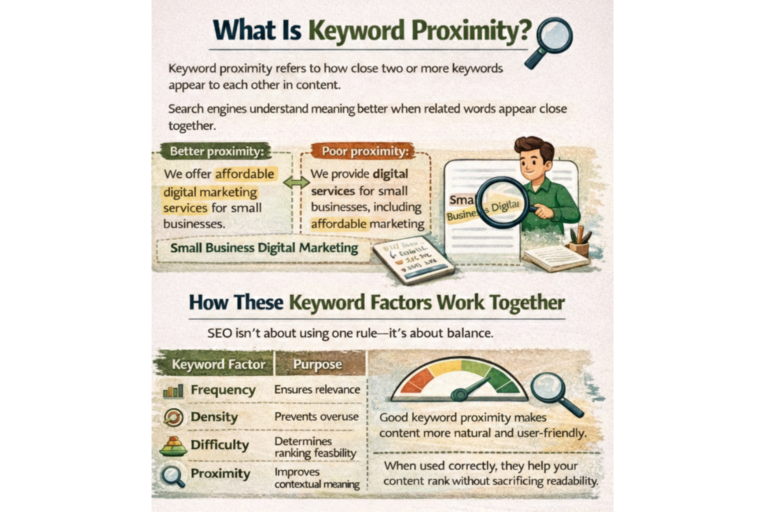
What Is Keyword Density?
(Keyword CountTotal Word Count)×100
. It is a content optimization metric used to indicate relevance to search engines, though modern algorithms prioritize natural, user-focused content over high, rigid percentages.
Formula:
(Keyword Appearances ÷ Total Words) × 100
Example:
If a 1,000-word blog uses a keyword 10 times:
Keyword Density = 1%
Ideal Keyword Density:
There’s no fixed rule, but generally:
0.5% – 2% is considered safe and natural
Why Keyword Density Matters:
- Prevents over-optimization
- Helps maintain content readability
- Signals relevance without spam
- Modern SEO focuses more on context and intent, not just numbers.
What Is Keyword Difficulty?
Factors That Affect Keyword Difficulty:
- Competition from big brands
- Domain authority of ranking websites
- Quality of existing content
- Number of backlinks
Example:
- Keyword: “Shoes” → High difficulty
- Keyword: “Affordable running shoes for beginners” → Lower difficulty
Why Keyword Difficulty Matters:
- Helps choose realistic keywords
- Saves time and marketing budget
- Improves ranking success rate
- Smart SEO Strategy: Target a mix of low, medium, and high-difficulty keywords.
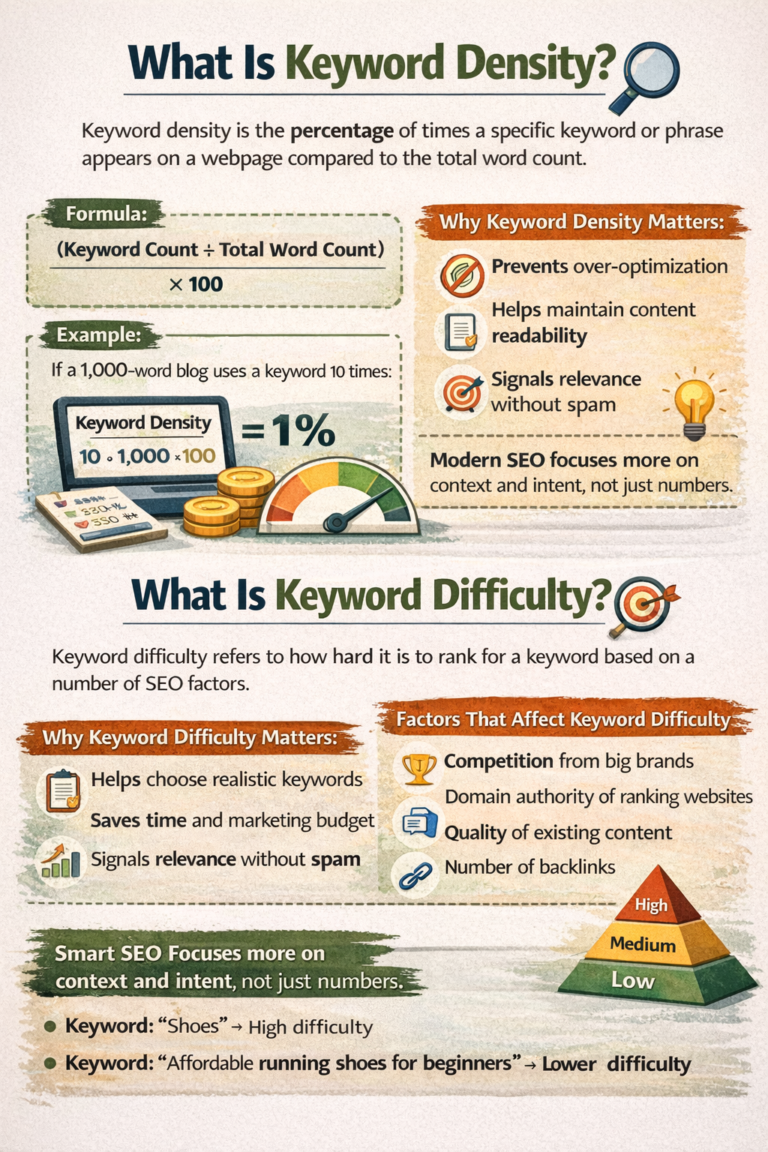
What Is Keyword Proximity?
Keyword proximity refers to how close two or more keywords appear to each other in content.
Search engines understand meaning better when related words appear close together.
Example:
- Better proximity:
- Poor proximity:
Why Keyword Proximity Matters:
- Improves contextual relevance
- Helps search engines understand intent
- Enhances semantic SEO
- Good keyword proximity makes content more natural and user-friendly.
- How These Keyword Factors Work Together
SEO isn’t about using one rule—it’s about balance.
Keyword Factor Purpose:
- Frequency Ensures relevance
- Density Prevents overuse
- Difficulty Determines ranking feasibility
- Proximity Improves contextual meaning
When used correctly, they help your content rank without sacrificing readability.
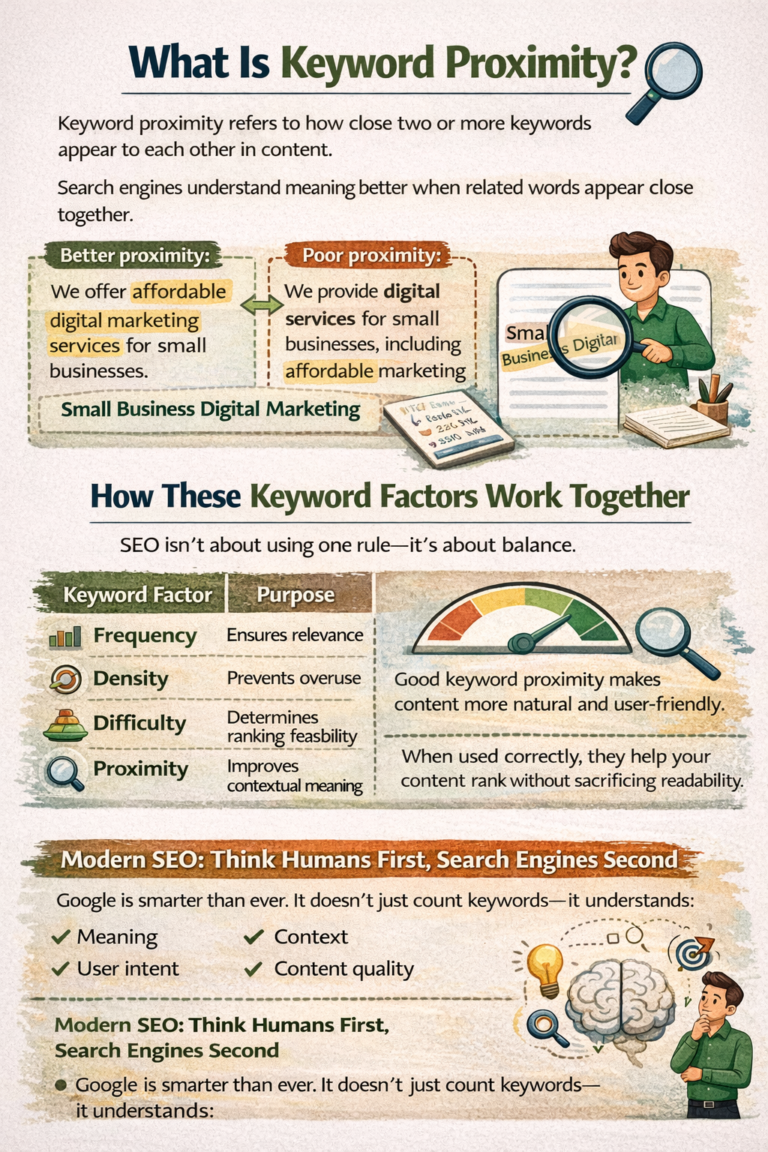
Modern SEO: Think Humans First, Search Engines Second
Google is smarter than ever. It doesn’t just count keywords—it understands:
- Meaning
- Context
- User intent
- Content quality
Conclusion
Understanding keyword frequency, density, difficulty, and proximity helps you:
- Write smarter content
- Avoid SEO penalties
- Rank for the right searches
- Attract the right audience
SEO success isn’t about tricks—it’s about clarity, consistency, and strategy.