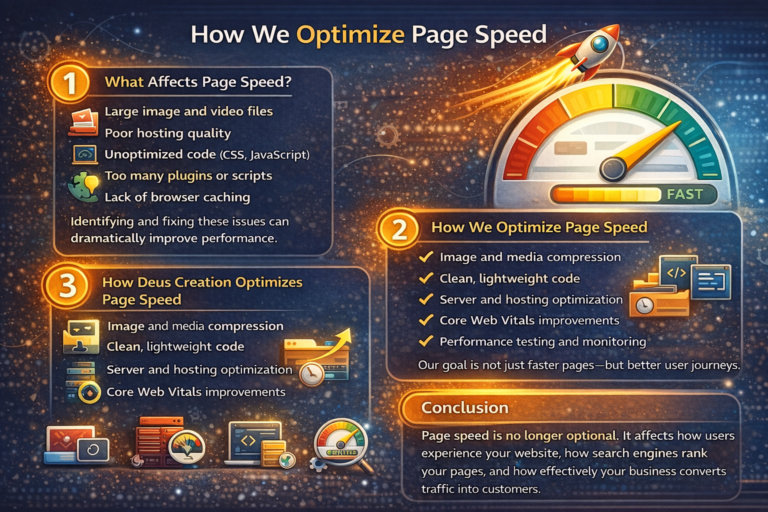
In today’s digital world, speed isn’t a luxury—it’s an expectation. If your website takes more than a few seconds to load, users won’t wait. They’ll leave. This is exactly where page speed becomes a critical factor for both user experience and SEO.
At Deus Creation, we treat page speed as a core pillar of website performance, not just a technical metric. Let’s understand what page speed really means and why it plays such an important role in your online success.
What Is Page Speed?
Page speed refers to how quickly a web page loads and becomes usable for visitors. It measures the time taken for visible content—such as text, images, and buttons—to appear and respond.
Unlike simple load time, modern page speed focuses on:
- How fast content appears
- How quickly users can interact
- How stable the page layout remains during loading
Search engines like Google evaluate page speed using real-world user data to understand actual performance.
Why Page Speed Matters So Much?
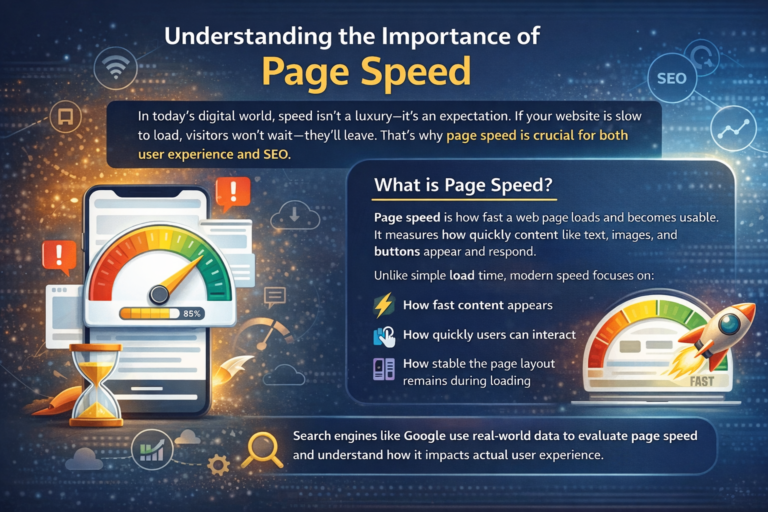
1. Better User Experience
Fast-loading pages create a smooth, frustration-free experience. Users stay longer, engage more, and are more likely to convert.
Slow pages lead to:
- Higher bounce rates
- Lower engagement
- Lost trust
A fast website signals professionalism and reliability.
2. Direct Impact on SEO Rankings
Page speed is a confirmed Google ranking factor. Faster websites are easier to crawl, index, and rank.
Google’s Core Web Vitals specifically measure:
- Loading performance
- Interactivity
- Visual stability
Optimizing page speed gives your site a competitive edge in search results.
3. Higher Conversion Rates
Even a one-second delay can reduce conversions significantly. Faster pages encourage:
- More form submissions
- Higher sales
- Better lead generation
- Speed directly influences revenue.
4. Improved Mobile Performance
With most users browsing on mobile devices, page speed is more important than ever. Slow mobile pages lose traffic quickly, especially in competitive markets.
Google’s mobile-first indexing makes page speed essential for mobile SEO success.
What Affects Page Speed?
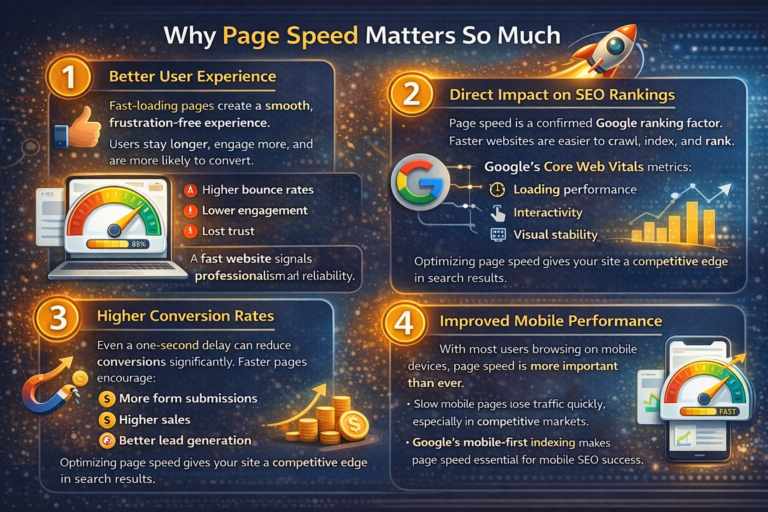
Several factors influence how fast a page loads, including:
- Large image and video files
- Poor hosting quality
- Unoptimized code (CSS, JavaScript)
- Too many plugins or scripts
- Lack of browser caching
- Identifying and fixing these issues can dramatically improve performance.
How Deus Creation Optimizes Page Speed?
At Deus Creation, we use a data-driven and user-focused approach to speed optimization:
- Image and media compression
- Clean, lightweight code
- Server and hosting optimization
- Core Web Vitals improvements
- Performance testing and monitoring
Our goal is not just faster pages—but better user journeys.
CONCLUSION
Page speed is no longer optional. It affects how users experience your website, how search engines rank your pages, and how effectively your business converts traffic into customers.