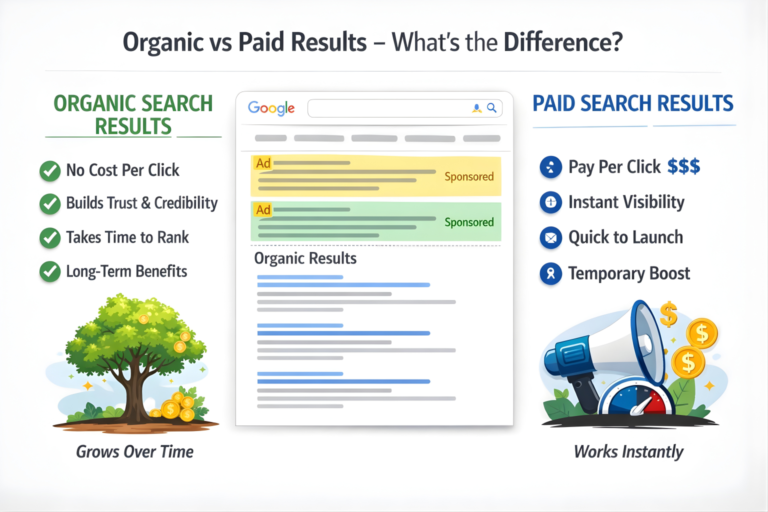
In today’s digital world, being online isn’t enough—you need to be visible where your audience is searching. When users look for a product or service on Google, they’re shown two main types of listings: organic and paid results.
“Which is better—organic or paid results?”
The truth is, both play an important role, but they serve very different goals. Let’s explain the difference between organic and paid results in a clear way.
What Are Organic Search Results?
Organic search results are the unpaid listings that appear on a search engine results page (SERP). These results are based on factors such as relevance to the user’s search query, incoming links, valid search engine optimization (SEO) efforts and domain authority.
Search engines display organic results based on factors such as:
- High-quality, relevant content
- Strong SEO (Search Engine Optimization)
- Keyword relevance and intent
- Website performance and user experience
- Authority, trust, and backlinks
Example:
When someone searches “best digital marketing agency in India”, the results that appear below the ads are organic search results.
Key Features of Organic Results:
No cost per click
Builds long-term credibility and trust
Higher user confidence
Takes time to rank
Results are not immediate
Organic marketing is like growing a tree—it requires patience, but once established, it delivers consistent and long-lasting value.
What Are Paid Search Results?
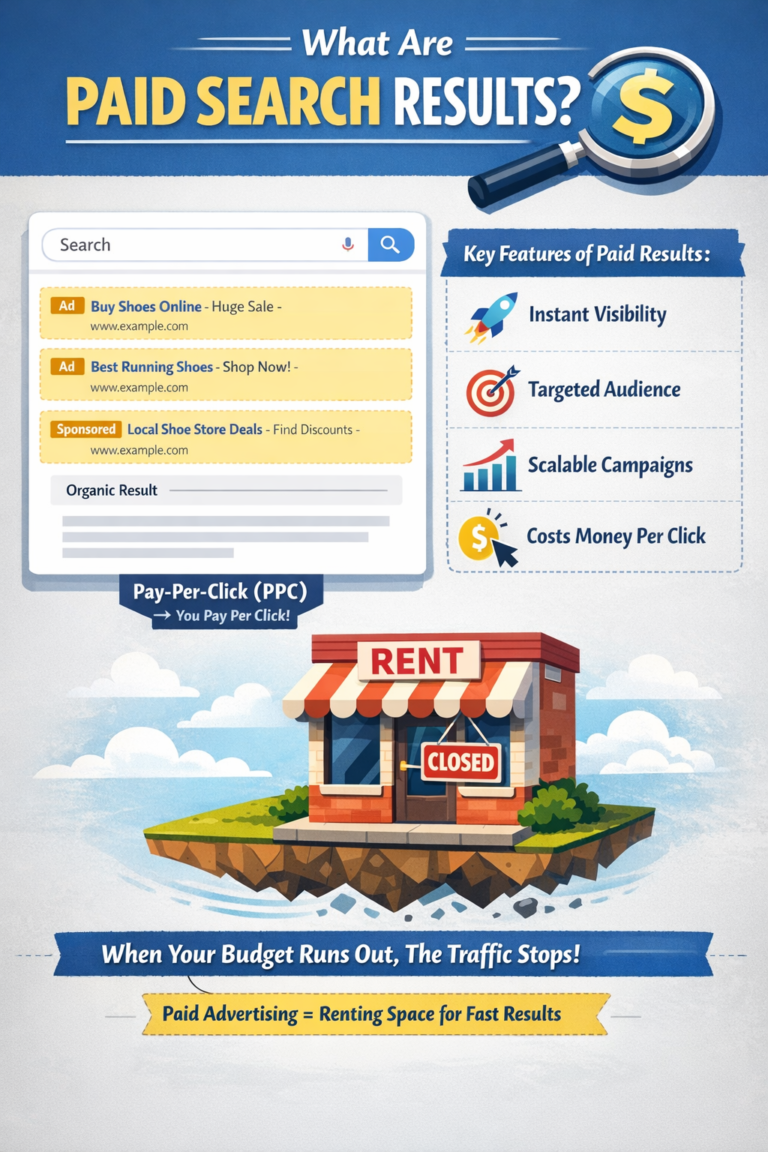
Paid results are advertisements that appear at the top or bottom of search engine results pages. Businesses pay for these placements using platforms like Google Ads.
You’re charged each time someone clicks on your ad—this model is known as Pay-Per-Click (PPC).
Example:
Any result labelled “Sponsored” or “Ad” is a paid search result.
Key Features of Paid Results:
Instant visibility
Highly targeted audience reach
Easy to scale campaigns
Costs money for every click
Traffic stops when the budget stops
Paid marketing is like renting space—it’s powerful for fast exposure but not permanent.
Organic and Paid Results: A Quick Comparison
| Feature | Organic Results | Paid Results |
|---|---|---|
| Cost | Free clicks | Pay per click |
| Visibility | Takes time | Instant |
| Trust Level | High | Medium |
| Long-Term Value | Strong | Short-term |
| Scalability | Slow but stable | Fast |
| Sustainability | Long-lasting | Budget-dependent |
Organic or Paid Results: Which Should You Choose?
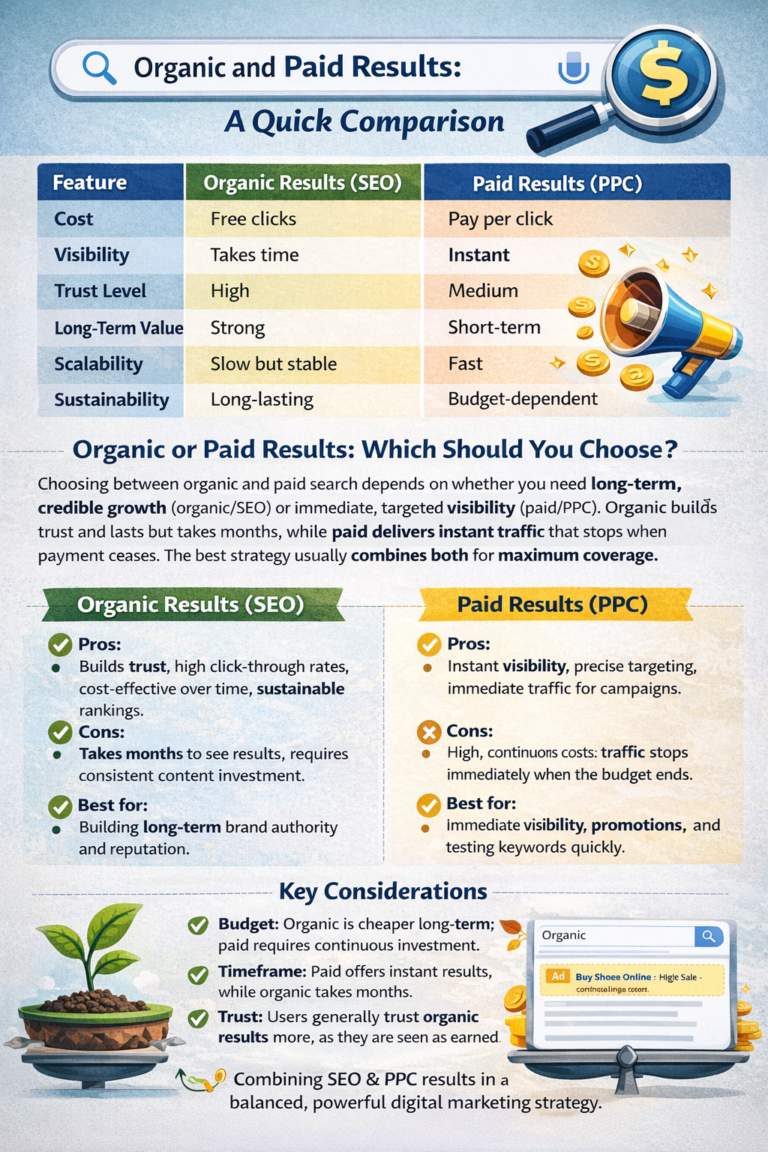
Choosing between organic and paid search depends on whether you need long-term, credible growth (organic/SEO) or immediate, targeted visibility (paid/PPC). Organic builds trust and lasts but takes months, while paid delivers instant traffic that stops when payment ceases. The best strategy usually combines both for maximum coverage.
- Organic Results (SEO):
- Pros: Builds trust, high click-through rates, cost-effective over time, sustainable rankings.
- Cons: Takes months to see results, requires consistent content investment.
- Best for: Building long-term brand authority and reputation.
- Paid Results (PPC):
- Pros: Instant visibility, precise targeting, and immediate traffic for campaigns.
- Cons: high, continuous costs; traffic stops immediately when the budget ends.
- Best for: immediate visibility, promotions, and testing keywords quickly.
- Budget: Organic is cheaper long-term; paid requires continuous investment.
- Timeframe: Paid offers instant results, while organic takes months.
- Trust: Users generally trust organic results more, as they are seen as earned.
- Best Strategy: Use paid search to fill the gap while SEO builds, or to dominate search engine real estate with both.
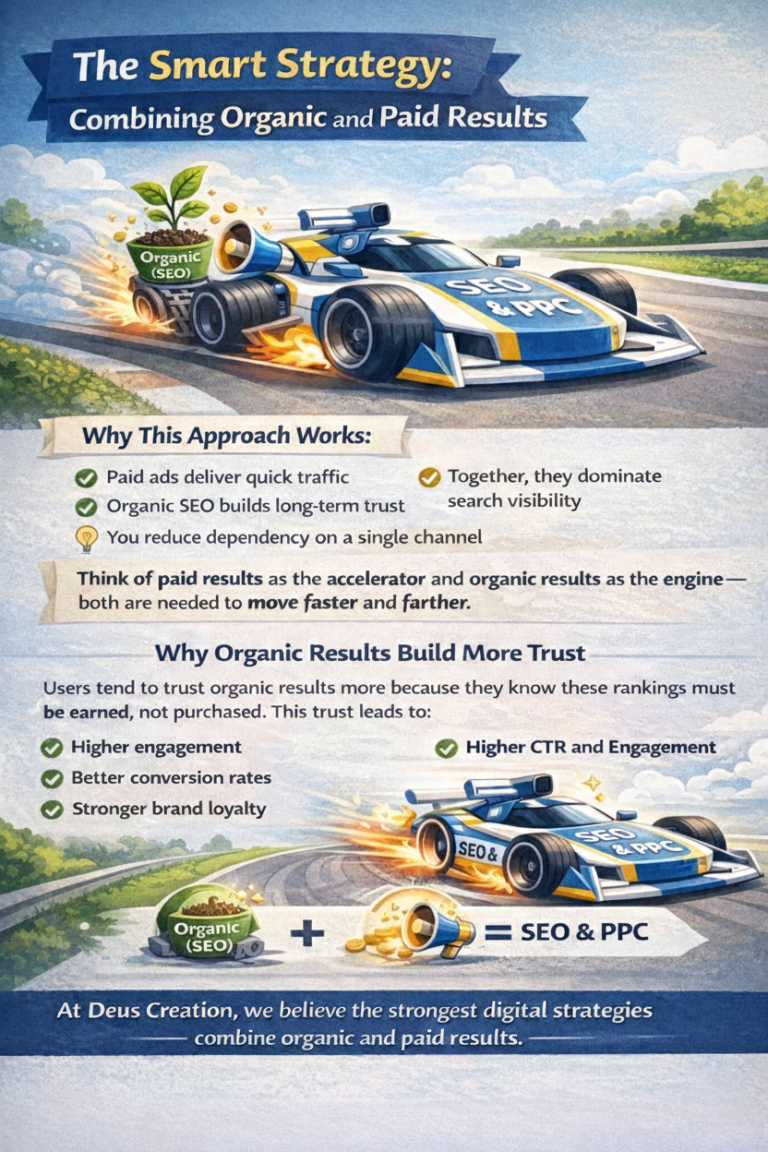
The Smart Strategy: Combining Organic and Paid Results
At Deus Creation, we believe the strongest digital strategies combine organic and paid results.
Why This Approach Works:
- Paid ads deliver quick traffic
- Organic SEO builds long-term trust
- Together, they dominate search visibility
- You reduce dependency on a single channel
Think of paid results as the accelerator and organic results as the engine—both are needed to move faster and farther.
Why Organic Results Build More Trust
Users tend to trust organic results more because they know these rankings must be earned, not purchased. This trust leads to:
- Higher engagement
- Better conversion rates
- Stronger brand loyalty
- Higher CTR and Engagement
Organic traffic doesn’t just bring visitors—it brings intent.
Why Paid Results Still Matter
While organic results build the foundation, paid results provide:
- Immediate exposure
- Target audience reach
- Controlled budget and ROI tracking
- Guaranteed placement
- Increased Brand Awareness
CONCLUSION
Organic and paid results are not competitors—they’re partners.
- Organic results drive authority, trust, and long-term success.
- Paid results deliver speed, visibility, and quick wins.
The most successful brands don’t choose between them—they balance bot