Search engines don’t just judge your website by its content—they also look closely at who links to you and how those links are structured. That’s where a link audit becomes essential.
A healthy backlink profile can boost your rankings and authority. A poor one can quietly drag your site down. A link audit helps you see the difference—and fix the problems before they hurt your SEO.
What Is a Link Audit?
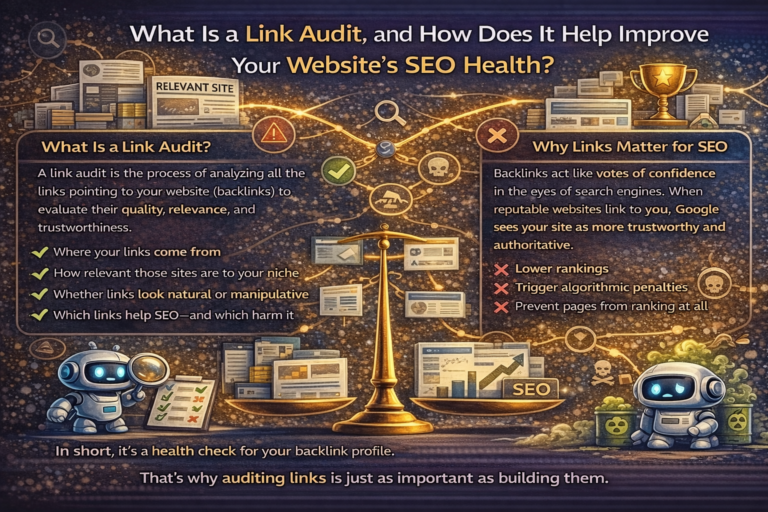
A link audit is the process of analyzing all the links pointing to your website (backlinks) to evaluate their quality, relevance, and trustworthiness.
Instead of counting how many links you have, a link audit focuses on:
- Where your links come from
- How relevant those sites are to your niche
- Whether links look natural or manipulative
- Which links help SEO—and which harm it
In short, it’s a health check for your backlink profile.
Why Links Matter for SEO?
Backlinks act like votes of confidence in the eyes of search engines. When reputable websites link to you, Google sees your site as more trustworthy and authoritative.
However, not all links are good links.
Low-quality, spammy, or unnatural backlinks can:
- Lower rankings
- Trigger algorithmic penalties
- Prevent pages from ranking at all
That’s why auditing links is just as important as building them.
How a Link Audit Improves SEO Health?
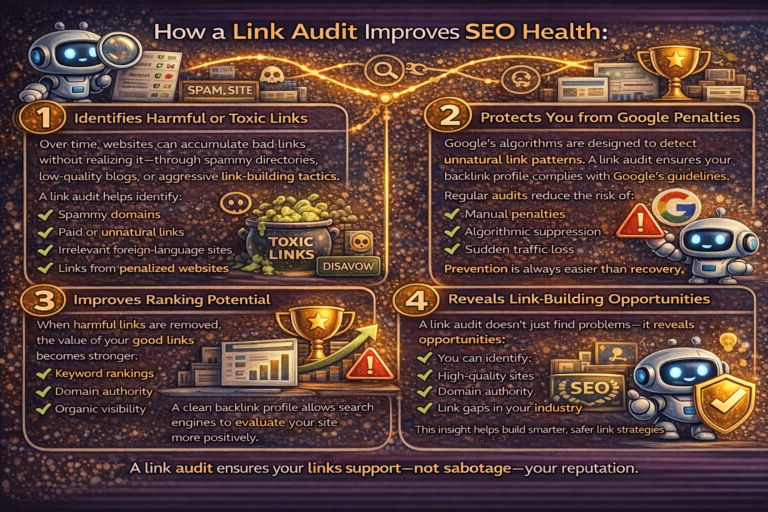
1. Identifies Harmful or Toxic Links
Over time, websites can accumulate bad links without realizing it—through spammy directories, low-quality blogs, or aggressive link-building tactics.
A link audit helps identify:
- Spammy domains
- Paid or unnatural links
- Irrelevant foreign-language sites
- Links from penalized websites
Removing or disavowing these protects your site from ranking drops.
2. Protects You from Google Penalties
Google’s algorithms are designed to detect unnatural link patterns. A link audit ensures your backlink profile complies with Google’s guidelines.
Regular audits reduce the risk of:
- Manual penalties
- Algorithmic suppression
- Sudden traffic loss
Prevention is always easier than recovery.
3. Improves Ranking Potential
When harmful links are removed, the value of your good links becomes stronger. This can improve:
- Keyword rankings
- Domain authority
- Organic visibility
A clean backlink profile allows search engines to evaluate your site more positively.
4. Reveals Link-Building Opportunities
A link audit doesn’t just find problems—it reveals opportunities.
You can identify:
- High-quality sites linking to competitors but not you
- Content that attracts strong backlinks
- Link gaps in your industry
This insight helps build smarter, safer link strategies.
5. Strengthens Overall Website Trust
Search engines want to rank websites that users can trust. A strong link profile signals:
- Credibility
- Authority
- Industry relevance
A link audit ensures your links support—not sabotage—your reputation.
When Should You Do a Link Audit?
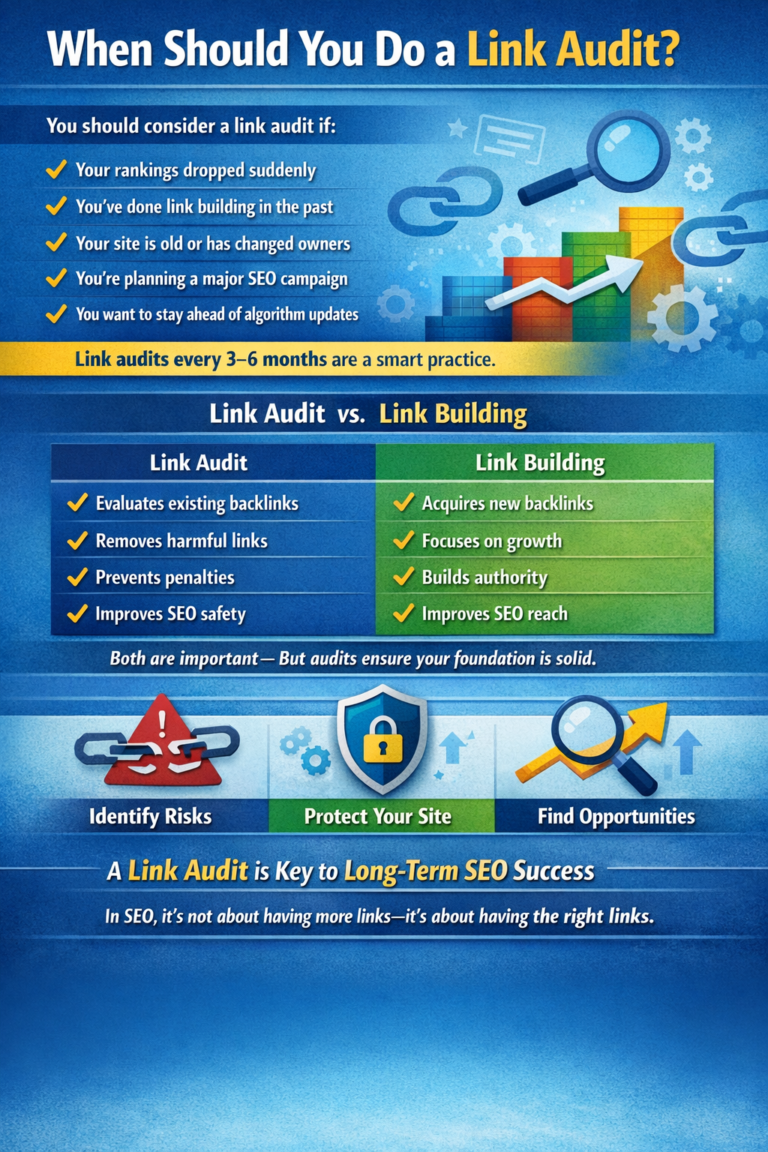
You should consider a link audit if:
- Your rankings dropped suddenly
- You’ve done link building in the past
- Your site is old or has changed owners
- You’re planning a major SEO campaign
- You want to stay ahead of algorithm updates
For most websites, a link audit every 3–6 months is a smart practice.
Link Audit vs. Link Building
| Link Audit | Link Building |
|---|---|
| Evaluates existing backlinks | Acquires new backlinks |
| Removes harmful links | Focuses on growth |
| Prevents penalties | Builds authority |
| Improves SEO safety | Improves SEO reach |
Both are important—but audits ensure your foundation is solid.
A link audit is not just a technical task—it’s a critical step in maintaining long-term SEO success.
By identifying harmful links, protecting against penalties, and uncovering growth opportunities, a link audit helps keep your website’s SEO healthy, trusted, and competitive.
In SEO, it’s not about having more links—it’s about having the right links.
If you want to know more about Link Audit services, you can contact to our website https://deuscreation.com/